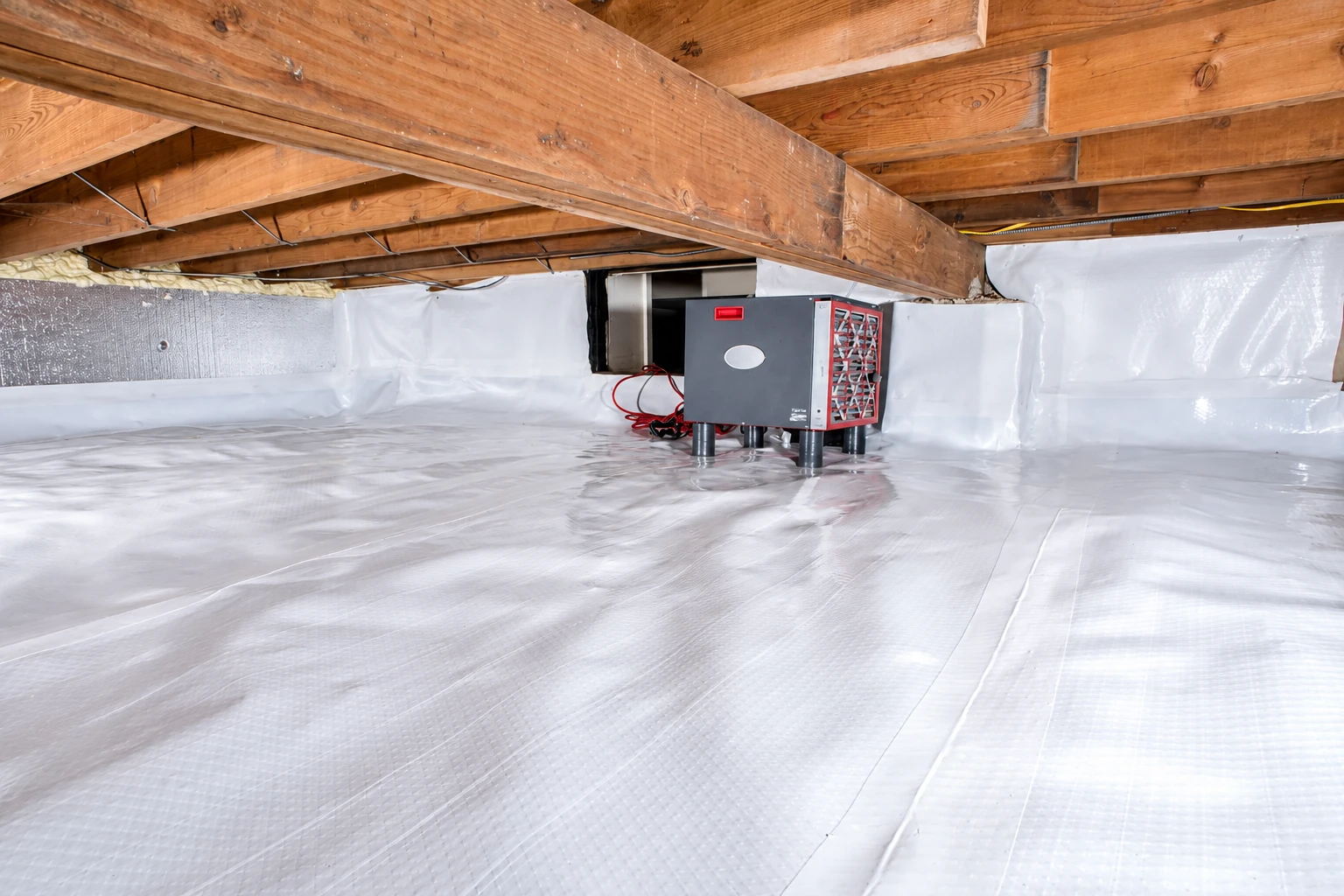
I start by looking hard at the attic and the crawl space, because a roof leak, old wiring or a bathroom fan blowing into the attic needs fixing first, and I'd rather tell you that than seal over it. If your house has a gas water heater or furnace that vents on its own draft, we make sure it's drafting safely before we tighten anything up, since a tighter house can pull fumes back inside, and if it isn't safe, that gets fixed before we go on. Then our crew pulls back the old insulation and seals the gaps you can't see from below, around can lights, pipes, wires, the attic hatch and where the ducts come through the ceiling, using caulk, spray foam and weatherstripping. We keep the eave vents and any combustion air openings clear so the attic keeps breathing, and when we're done, we test the house so you can see the result for yourself.
Most sealing jobs lead into insulation work, because insulation slows heat but doesn't stop moving air. Below the house, sealing usually goes alongside basement insulation, and where moisture is a worry, closed-cell foam insulation, a dense foam that also blocks moisture, can seal and insulate the same surface.
Seal the gaps, then top up loose fill
This suits most attics, where the ducts don't run up there and the old insulation is dry and clean. It costs less than foam, and once the leaks are closed, a top-up of blown-in insulation, loose fill blown through a hose, can do the rest.
Spray foam when the ducts live in the attic
Foam costs more, but it seals air while it insulates, so it's the better pick when your ductwork runs through the attic and should sit inside the sealed space. I'll tell you which way your house leans once I've seen it, and why.