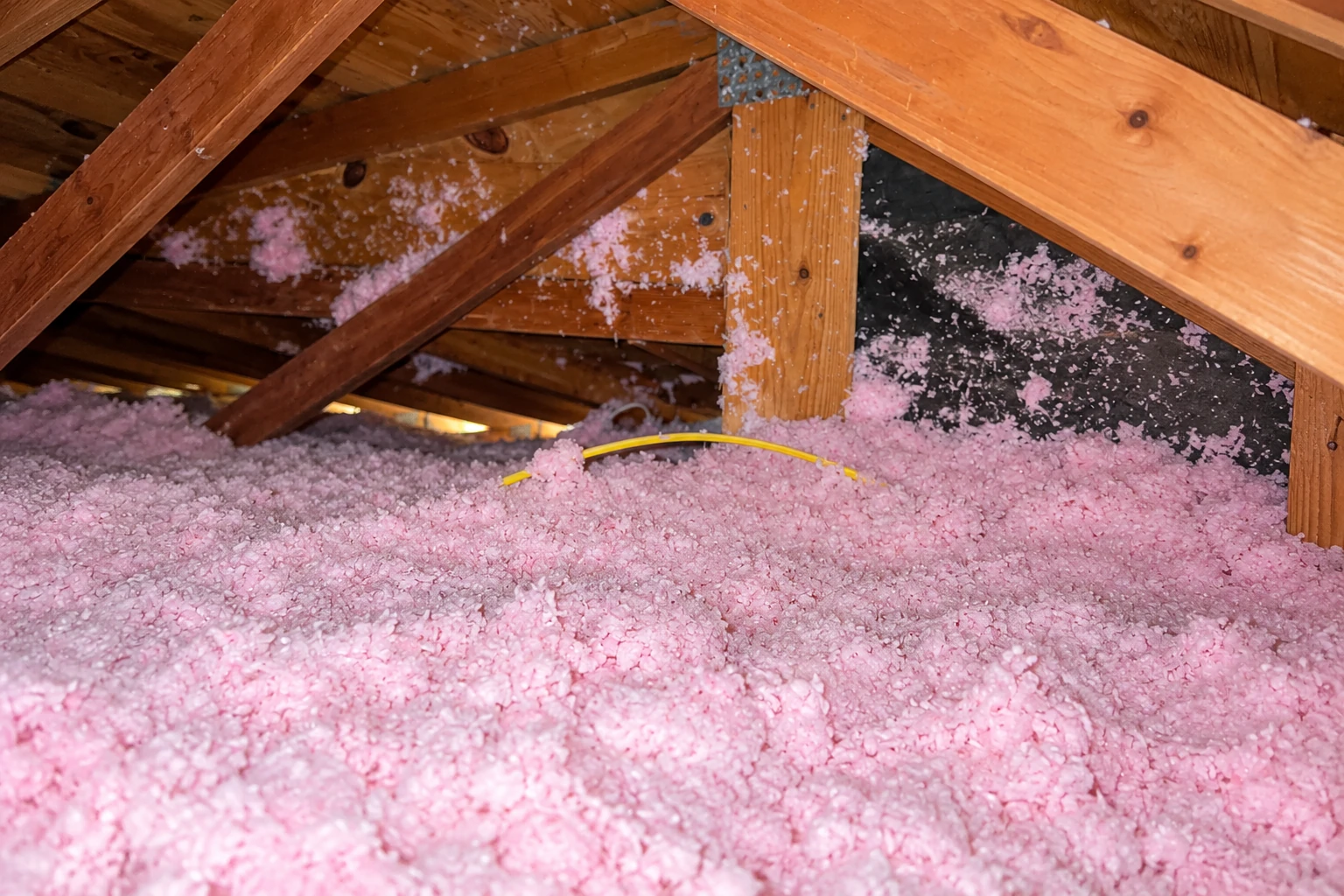
I start in the attic with a flashlight, looking for roof leaks, fans venting into the attic instead of outside, and recessed lights, because insulation laid over any of those just hides the problem until it shows up in your ceiling. If the old insulation is soaked or full of droppings, it comes out instead of getting buried under new material. Then our crew does the air sealing, closing the gaps around lights, pipes, wires and the attic hatch, so the new insulation isn't fighting a draft. We keep the vents at the roof edge clear so the attic can still breathe, and we carry the full depth out to the edges, where it usually runs thin, instead of piling it up in the middle. When we finish, we leave you a written note of what went in and how deep.
Most attics we work in get blown-in insulation, which is loose fill blown through a hose, because it settles into the odd corners around joists and wiring without tearing anything up. If the attic is only one part of a drafty house, we can look at the walls, floors and crawl space together under home insulation, so you're not sealing the top of the house while cold air comes up through the floor.
Air sealing plus blown-in loose fill
This suits most vented attics where the ductwork runs under the house or in the walls, because sealing the gaps and topping up with loose fill does most of what foam does for less money. It's what I usually recommend, and it goes right over old insulation that's dry and clean.
Spray foam on the underside of the roof
This suits attics where the ductwork lives up there, because foam sprayed under the roof deck brings those ducts inside the insulated space and seals air while it insulates. It costs more, so I only point you this way when the ducts make it worth paying for.