Thin sheet for a tighter budget
A thin contractor-grade sheet costs the least up front and works fine under a house where nobody goes in much. It tears more easily under knees and dragged tools, so you'll be replacing it sooner.
Musty smell, damp dirt or cold floors? We find where the crawl space moisture starts, then lay a cover that keeps ground moisture down.
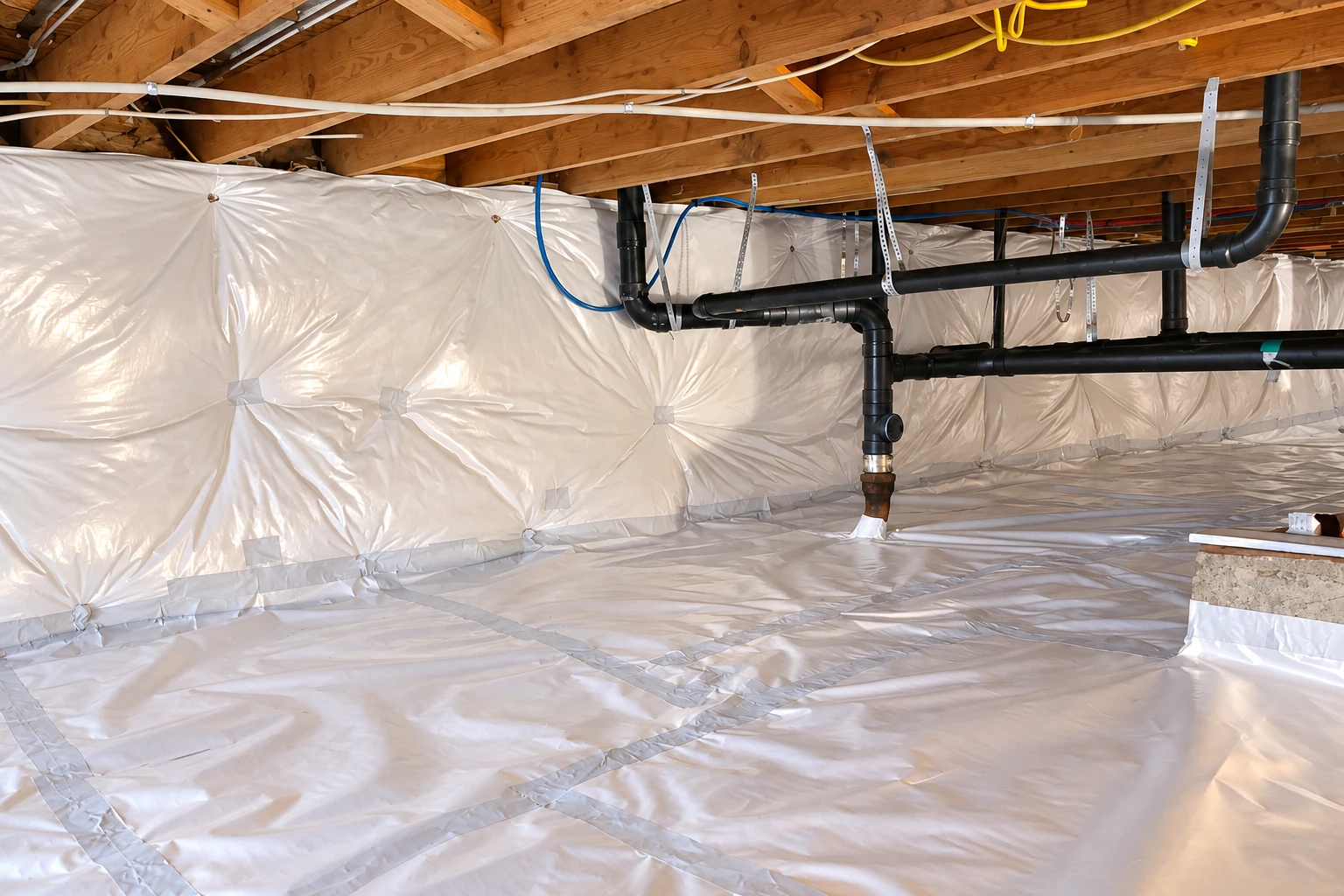
Vapor barrier installation in Seaside means laying a plastic ground cover over the dirt floor of your crawl space, so less moisture and soil gas rises from the ground into your house.
Most people call us because of a musty smell coming up through the floors, rooms that feel cold underfoot, or damp, dark dirt when they lift the crawl space hatch. What moves the price is how big the crawl space is, how heavy a sheet you choose, how much has to be cleared out first and whether water needs fixing before we start. That last part also decides the schedule, because if water is getting in from outside, it gets sorted before any plastic goes down. When I come out for the estimate, you get your own figure for your house, and if the floors are cold we can talk about crawl space insulation on the same visit.
I come out, crawl in and write the estimate myself, so the price is based on what's actually down there. Our installers do the work, and when they're finished I walk through it with you so you know exactly what we did and why.
We're licensed and fully insured, so you aren't carrying the risk while our crew is working under your floor. Landlords and property managers call us for the same reason, because they want someone steady and easy to deal with on their rentals.
I spent years doing upkeep for a property management company before I started this business in Seaside in 2023. That work taught me to fix the cause first, so I'll tell you if a downspout or a leak needs attention before we lay plastic.
We reply within one business day, and the estimate is free, done on site and comes with no obligation. After you send the form or call (831) 204-4546, we set a time for me to come out, look under your house and write up what it needs. It helps if you can tell us whether your crawl space has vents, any signs of water you've seen and how often you go down there.
Seaside sits under the Central Coast marine layer, the damp fog that pushes inland on many mornings, especially from May to August. A lot of the older homes we see here sit over a vented dirt crawl space, so that moist air and the ground below it both work on the wood under your floor. Soil gas is the other reason people ask about a cover. The state publishes a radon potential map for Monterey County with zones for the western part of the county, but it's only a guide, and the only way to know your home's radon level is to test for it.
We're based in Seaside and work in cities across Monterey County, into Santa Cruz County and over to Gilroy, including Marina and Monterey. If you're not sure we come out your way, just ask.
Yes, national building guidance from the Department of Energy says to put the plastic ground cover down whether the crawl space is vented or sealed. In a vented crawl space it cuts the moisture coming off the dirt and helps keep soil gases out of the house, so you don't have to seal the vents to get that benefit.
One cost guide puts a thin 6-mil contractor-grade sheet at about 3 to 5 years and a 20-mil reinforced barrier at 25 years or more, a mil being a thousandth of an inch. The heavier one costs more per square foot, so you're trading a lower price now against how soon you'd redo it.
Not by itself, because the cover only slows the vapor rising out of the soil. National guidance says most water in a vented crawl space gets in from outside, through ground sloping toward the house, missing drainage around the foundation or sprinklers soaking the soil. That guidance also says to deal with drainage problems first, before anyone seals and insulates a crawl space.
It can help, since a well-installed cover limits soil gases such as radon coming up from the ground. It won't tell you whether you have a radon problem, though, and as the county map note above says, only a test does.
Clear out whatever you've stored down there so the cover can run across the whole floor. Federal guidance calls for plastic at least 6 mil thick covering the whole floor, or as close as is reasonably possible, so every box left behind is a patch of bare dirt. If something is too heavy to move, tell me at the estimate and we'll plan around it.
The price comes down to how big your crawl space is, which sheet you choose and how much has to be cleared out before we start. If water is getting in, fixing that first adds to the job. You get your own figure at the estimate, once I've been under the house.