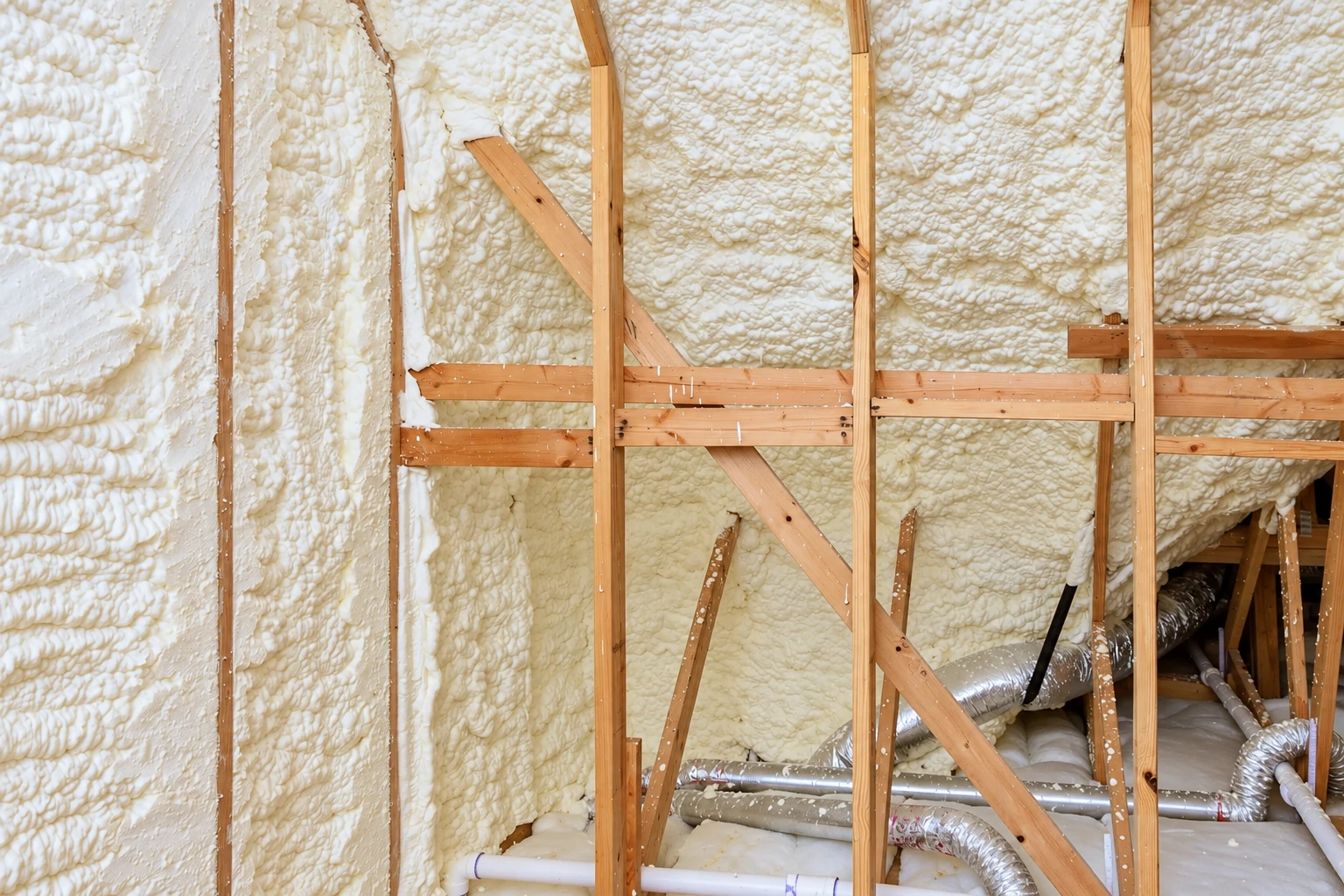
Closed-cell costs more, so we only suggest it where its denser build and moisture resistance are worth paying for, and I'll tell you when open-cell or another material would do the job. A lot of attics do fine with air sealing, which means closing the gaps around lights, pipes and the hatch, plus a top-up of blown-in loose fill. That changes when your ductwork runs up there, because then foam on the underside of the roof starts to earn its price. When foam is the right call, we start by fixing what it would otherwise bury, so a roof leak, old wiring or insulation that's wet or full of droppings gets dealt with first. Then we cover anything that shouldn't get foam on it and spray the closed-cell in even passes so the edges get as much as the middle. We trim it where it needs trimming, clean up, and leave the space airing out until your re-entry time, the point when it's safe to come back in.
Foam work often ties into other choices. Where moisture isn't the worry, like interior walls or a roof deck that stays dry, open-cell foam insulation is softer and costs less, and we'll price both for you if you're on the fence. For shops, offices and rental buildings, our commercial insulation work follows the same order on a bigger footprint.
Under the roof deck, when the ducts are up there
If your heating ducts run through the attic, spraying closed-cell on the underside of the roof brings them inside the insulated part of the house. It costs more than sealing and topping up, but it's often the one spot where foam clearly pays its way.
Crawl spaces and rim joists
Under a raised floor, closed-cell goes on the rim joists, the framing around the edge of the floor, and other spots where air and ground moisture get in. It suits homes with cold floors and a crawl space that stays damp.
Thin walls and tight framing
When there are only a few inches of space to work with, closed-cell packs more insulating value into each inch than softer materials do. It fits a room over the garage or an older wall you're opening up anyway.